
August 2016

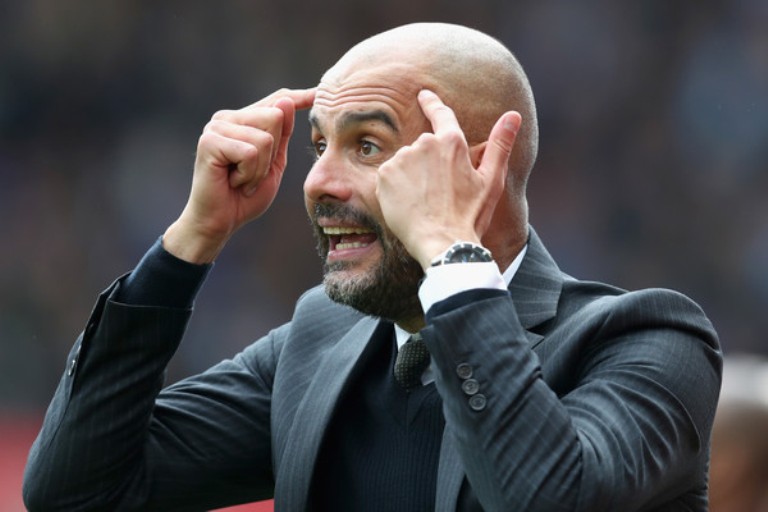
Guardiola set to change the face of English Football

It was 29th April, 2008 and Barcelona had just been knocked out of the Uefa Champions League semi finals by Manchester United courtesy of a Paul Scholes stunner. The dominant Barcelona side were in disarray, their decline in two years was oh-so alarming. But mystifyingly, the Champions League triumph of 2006 birthed their decline. The players lost their hunger and some were more interested in partying. Chaos ensued at the Camp Nou which led to a complete breakdown in discipline within the dressing room. The unruliness persisted, and ultimately the blasé attitude of some of the players led to a trophyless 2006/2007 season in Catalonia. The 2007/2008 season wasn’t any better as Barça finished 18 points behind La Liga champions Real Madrid and failed to win the Champions League. That was the final straw and Frank Rijkaard was relieved of his duties as manager. In came 37 year old Josep Guardiola who would live the dream of managing the team he represented for much of his playing career. Pep was previously coach of the Barcelona B team and it was a successful stint there as he added intensity and work rate to their technical abilities. He instilled a fiercely competitive winning spirit into the team, leaving nothing to chance. He demanded high standards, irrespective of being a reserve team playing in the third division. Barça B finished the 2007/2008 season as champions, winning the playoffs to be promoted into the Second Division. Guardiola’s reputation was burgeoning. There were doubts about him though. He was perceived to be inexperienced as he had only one year of management under his belt, more so with a reserve side. It wasn’t an “easy” job for Pep because he walked into the first team dressing room with the club in turmoil both on and off the pitch. At his first press conference as Barça boss, he said “I am the leader, they follow me and we will achieve. They should follow me.” One of the first things Guardiola did was to get rid of players who he considered disruptive in the dressing room. Out went Ronaldinho, Thiago Motta and Deco and Samuel Eto’o. He built his team on the Spanish core of home based players who valued what it meant to play for Barcelona and uphold the ethos of the club. Josep Guardiola went on to create the best Barcelona side of all time, sweeping all before them and playing some of the best football ever seen. They showed the football world another way of winning. They were competitive and intense. They surely raised the bar and set a standard for modern football. During his time at Camp Nou, Barça won fourteen titles between 2008 and 2012, dominated individual awards and became the standard. Lionel Messi became the best player of his generation, claiming three Ballon d’Or victories. Barcelona’s treble winning season in his opening year was the first of the 21st century in Europe. The six trophies in a calendar year, was another record. Of the 255 games played over 4 years, they won 194 – a staggering 76% win rate. They scored 723 goals, conceded 212 and lost only 24 games. Armchair supporters have incessantly discredited Guardiola’s achievements. The cynics feel he had an easy job to do at Barcelona as they liken it a PlayStation video game. That’s Nonsense. His job at Barcelona was challenging, he made mistakes, but he made them his way. He made history too. His success at Bayern Munich has also been discredited by naysayers. The commonly repeated, yet false rhetoric is he ‘failed’ in German football because he didn’t have success in the Champions League with the Bavarian giants. That isn’t only unfair, but downright lazy. Besides winning seven trophies with Bayern, he had a positive effect on the football culture in Germany. Winning the Champions League isn’t something any manager can guarantee – irrespective of reputation and track record. Guardiola improved the players at Bayern by challenging them tactically and physically. Philipp Lahm became more versatile, Manuel Neuer, Jerome Boateng, David Alaba and Thomas Muller blossomed into better players with meticulous hard work and coaching. Rafinha was another player who was revitalized under Guardiola. It’s no coincidence that the national teams of Spain and Germany won big trophies with Pep Guardiola managing in those countries. His decision making had an extremely positive impact on their respective national teams – Spain’s especially. Guardiola’s presence in English football can only be regarded as a blessing. He would improve the tactical side of the game in England and change the way people live and breathe football. There would be challenges, but nothing he wouldn’t overcome or at least strive to. Case in point – the 4-1 victory away at Stoke City, a team difficult to beat in the windy town. It may be too early to call, but John Stones and Raheem Sterling already look better under the Spanish manager’s tutelage. English football can only get better. No matter how much Pep Guardiola achieves, one thing is certain, the bandwagon critics would remain, but it doesn’t change fact that the Catalan tactician has provoked a revolution in modern football.

Guardiola set to change the face of English Football Read More »
SPECIAL REPORT: How Olympic values can promote development in Nigeria

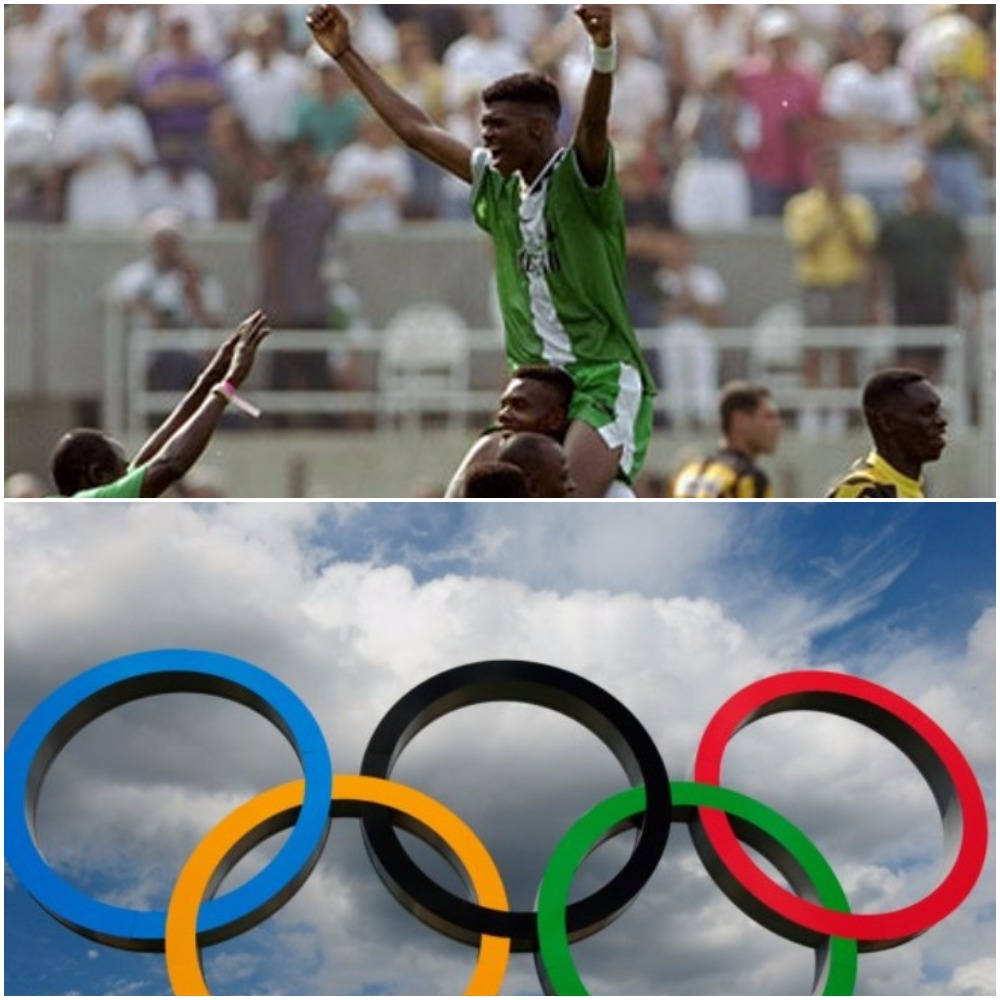
It has been exactly two decades since Nigeria’s contingent to the Atlanta ’96 Olympic Games performed heroics that blazed the trail for the Nigerian sporting community. In this article, the writer dwells on the significance of those performances and explicates how sport and Olympic values can develop youths individually and nationally. The conquests of Team Nigeria at the 26th edition of the modern Olympic Games held in Atlanta, Georgia, USA, in 1996 have left an ineffaceable mark in the hearts of all sport-loving Nigerians. The exploits of the country’s athletes, which culminated in six medals, were a landmark achievement for the Nigerian nation since its first Olympic Games participation in 1952. It also continues to be so even in the face of another Olympic Games currently taking place in Rio de Janeiro, Brazil.Although Olympic medals have been won at the games by preceding Nigerian contingents prior to that time, it was at Atlanta that Nigeria recorded a number of firsts. Chioma Ajunwa leapt a distance of 7.12 metres at the first try to become the first Nigerian athlete to win a track and field Olympic gold medal. The quartet of Falilat Ogunkoya, Fatima Yusuf, Olabisi Afolabi and Charity Opara won silver in the women’s 4×400 metres relay event. Ogunkoya and Mary Onyali also won bronze medals in the women’s 400 metres and 200 metres athletics events respectively. Duncan Dokiwari completed the trio of individual bronze medals won for the country.However, the most remarkable achievement of the games for Nigeria was the winning of the “mother of all gold medals” by the under-23 football team (known as the “Dream Team”) in the men’s football event. Under the tutelage of Bonfrere Jo, the team edged past soccer powerhouses Mexico, Brazil and Argentina to put Africa on the global soccer map. It was indeed Africa’s and Nigeria’s most glorious football moment when Kanu Nwankwo and other teammates waved jubilantly in a confetti rain with the gold medals dangling around their necks under the setting Georgia sun.Although four editions of the Olympic Games have come and gone, “the spirit of Atlanta ‘96” has not been diffused to subsequent Nigerian representatives at the Olympics. The country’s athletes have not been able to surpass or even replicate the exceptional performances of those Olympians. It seems that the protracted failure of Nigerian athletes to excel at the Games since 1996 can be attributed to three major factors: shoddy preparations by all stakeholders, inadequate funding by the Local Olympic Committee and the neglect by the athletes themselves of the values upon which the Olympic Games was founded.The Olympic Movement stipulates three values (or principles) upon which all Olympians are expected to compete. Excellence is the value which makes an athlete to give his best during the competition; it emphasizes participation, not winning. The friendship value sensitizes an athlete to regard sport as an instrument for mutual understanding which eschews the racial, religious, gender, socioeconomic and political barriers between him and participants from other countries. The third value, respect, lets an athlete dignify himself first, compelling him to perform within the set rules and regulations of sport (fair play) and his environment.Since the creation of the modern Olympic Games by Baron Pierre de Coubertin in 1896, concerted efforts have been made to make the Olympic values the definitive principles for the role of sports in individual and national development everywhere. One way this can been done is by introducing Olympic education into local school curricula. At the individual level, the Olympic values will make children privy of the fact that merely participating in sporting events does not translate to imbibing positive behaviours. Rather, when youths are taught Olympic values while in school, they will develop life and emotional skills long before they become professionals. They will also maintain a delicate, dynamic balance between their bodies, minds and wills. Further, the pursuit of merit instils in young minds the desire to be the best in their career choices and develop the skills to enjoy wholesome lifestyles. At the national level, sport and the Olympic values can be used as tools to forge peace among ethnic groups, races and governments. Global sporting events such as the Olympics Games have the capacity to arrest special national and international attention since they advance human rights and have renowned extensive economic, social and cultural significance. Indeed, modern sports can help to facilitate worldwide humanitarian concepts that can address issues facing all nations. One of these issues is war and peace, and this has inspired the United Nations to fund “sport for peace” projects in recent times.In the light of these surpassing values, it behoves Nigerian athletes at Rio ’16 and beyond to imbibe them so that they can restore Nigeria’s pride and return the country to its sporting zeniths.

SPECIAL REPORT: How Olympic values can promote development in Nigeria Read More »

subscribe to our newsletter

stay up to date with the latest content

Subscription Form

Scroll to Top