May 2020

Football, Life, and Coronavirus

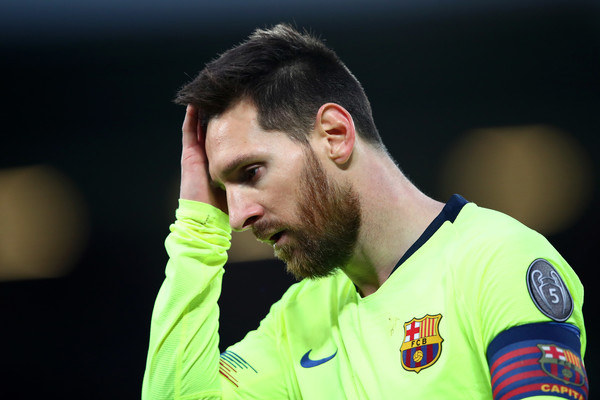
2020 feels like 1918, but without the war. This may beg the question, “what do they have in common?”, because it seems obvious the world has evolved. After all, it takes only an eye test to see that life in 1918 isn’t the same as life in 2020 with coronavirus. In case you’re wondering how I arrived at that conclusion hastily, I computed this with my phone and I’m pretty much sure this piece would be read via a phone, tablet, laptop, or what have you. That wouldn’t be possible in 1918. Away from tablets and phones, the similarities stare us in the face; a virus pandemic. In addition, a similar approach to clip the wings of the deadly coronavirus, as in 1918. A “lockdown” or what we could call “stay-at-home”.  Either way, the world has grown backwards to the dark old days of the 19th century both in the nature of the problem (virus pandemic) and the approach to solving it (a lockdown). Wondering why we’re talking about viruses, lockdowns, phones and football?  Here’s the intersection; we are where we are because of coronavirus. With that equation solved, there remains the tiny matter of football. How does football feature in all of these? Quite easy, football, like every other social activity, has taken the back seat in recent weeks and rightly so. After all, what’s football if lives are on the edge? On the scale of importance, it’s the least thing to worry about… right now. But as we have come to see or have to grudgingly accept in life, multiple things can matter at the same time, maybe not equally, but simultaneously. Top-flight football in Germany kicked off over the weekend, becoming the first major sports league in the world to resume play, as parts of Europe took more tentative steps towards normality after the devastation unleashed by the coronavirus pandemic #K24ThisMorning @iamjeffmote pic.twitter.com/ltkGGc3pXo — K24 TV (@K24Tv) May 18, 2020 Life matters, football matters too. Of course, not on the same scale, for we live to play— in that order. Live first and then play. Perhaps, stating that football matters would be considered asinine in this period. But it isn’t, is it? Life takes precedence (no doubt) but life isn’t just about “merely existing”. It’s about who we are, what we do, the games we play, our friends and family.  From this perspective, football matters despite how little that may appear in the bigger picture. So, why does it matter that we’re talking about a sport where people chase a round-leather object? Well, that’s not all this is about, is it? It goes beyond the gymnastics. It’s about the passion, the emotions, the atmosphere, and the chills of normalcy it gives. The latter part is why it’s almost inevitable not to talk about it right now.  The world needs that sense of normality and merely speaking about football may offer just that— normality. #Coronavirus: Premier League clubs resume training in small groups, with a return to top-flight football edging closer https://t.co/mbHq2rwsvb — Sky News (@SkyNews) May 19, 2020 It may be trivial but it’s important. In a time where uncertainty has dominated almost every facet of our activities causing panic, unrest, and fear, it may seem ridiculous to suggest talking about football as the antidote. Quite frankly, it isn’t. But it’s a step in the right direction. The semblance of normalcy it evokes; the memories and a form of escapism it offers are a welcome distraction from all the chaos in the air. Football as a means of escapism isn’t new in history. One prominent story comes to mind. The Christmas Truce in 1914 between British and German soldiers. A remarkable story where men at war decided to bury their hatchets of hostility for a kickabout in a mud-filled with shell holes. “A couple of Britons brought a ball along from their trenches and a lively game began.  How fantastically wonderful and strange. The English officers experienced it like that too— that thanks to soccer and Christmas, the feast of love, deadly enemies briefly came together as ‘friends’ ” as wonderfully described in the diary of ex-German lieutenant, Kurt Zehmisch, which was discovered by his son Rudolf in 1999. The moment, however short-lived, still remains one of the biggest reference points of how football remains the most important of the non-important things. Today, we draw reference points from the spirit— not action— of unison of these soldiers as we fight to outlast the mess the coronavirus pandemic has plunged us into. The Christmas Truce in No Mans Land is a gentle reminder that in the darkest of times, football— whichever forms of it we can hold on to— can be the needed distraction. As the event in 1914 proved, war is war, and football is something much better. In these trying times, we need what is better— football. Follow Tolu on Twitter: @AkoredeNate Photo Credit: Getty Images

Football, Life, and Coronavirus Read More »
The Debate: To play or not to play football with coronavirus still on the loose

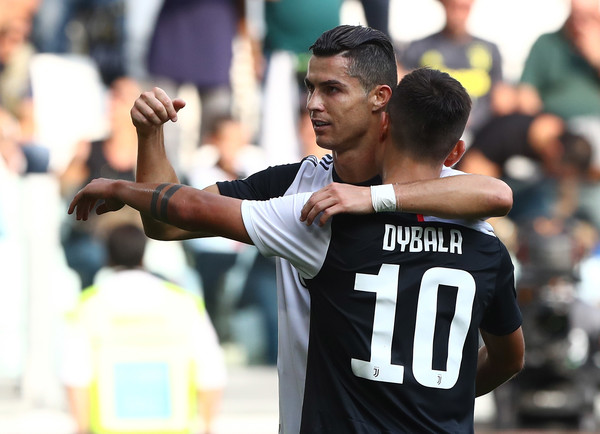
Not since World War II has football across the world seen a serious disruption. The six-year battle between the Allied Forces and Axis Forces meant events like the Copa America, World Cup and the old English First Division did not hold. Another war is upon us in the form of the coronavirus that has affected more than 4.5 million people across the globe and killed more than 300,000 people as well. Football has been on hold since March because of restrictions placed by governments to curb the spread of the virus, but now that those restrictions are been lifted, there’s a green light to resume. Some think it’s too early to resume because of cases that keep increasing daily while some think the game needs to resume to prevent huge losses from pilling up. Football writers Emmanuel Akinloye and Kunle Fayiga present their cases. Emmanuel Akinloye: ‘Yes, Lives are precious but are sustained by decent economic orders’ Life is replete with topsy-turvy curves and quite a number of times when we are presented with unpremeditated disaster, we are often forced to make costly sacrifices at the expense of equally important alternatives. To explain much better, the present conundrum is a conflict between health and a potentially sick economy. You leash one for the other and the result proves otherwise. Human lives are precious, no doubt! but, we must also be conscious of the economic ratification, which as far as I’m concerned is capable of entrusting many into death knell. In the football parlance, nothing is different. Top five European leagues are set to lose a whopping £4.1 billion. The Premier League (£1.2 billion), La Liga (£958 million), Italian Serie A (£650 million), Bundesliga (£750 million) the French Ligue 1 (£400 million). “There hasn’t been a survey on whether the players want to play or not.” ❌ “They can’t contract them to play under this situation!” ???? “We need to know what the players really think.” ???? Sam Allardyce says we need to hear from the players before starting the league again pic.twitter.com/ye9ZAG2dfZ — talkSPORT (@talkSPORT) May 15, 2020 A huge chunk of this money is entirely tied to selling broadcasting services as media rights. Broadcasting services, on the other hand would demand payments provided there’s a breach in contracts. For instance, the EPL is currently on a three-year contract of over £12 billion for a broadcasting giant and obviously a breach by the virtue of hiatus in live matches would equate to the PL refunding a huge percentage of the money. Though the absence of matches as at now is quite understandable by broadcasting services and such uncharted occurrences might be sufficed with the force majeure clause, however, a decision to void or cancel the season amounts to a breach of contract and a refund of an initially deposited money. Thus, cancelling the season appears to be an unimaginable option, except willing or ready to fight a legal battle with unprecedented debts as its endnotes. Save for these philanthropy, clubs and non-playing staffs are possibly to be retrenched and their monetary sources cut off amidst a haze of economic turbulence. Thus, they are likely to be swept by an economic tornado rather than the horrendous stranger — Coronavirus itself. Arguments of cancellation are myopic as much as humanely pretentious. They must be weighed not from deceptive conjectures but equally accurate facts and figures from an undiluted economic sense. How would clubs maintain wage payment? How would players already retrenched sustain economic balance? Lives are important but if these are left unchecked, perhaps we are laying ambush without cleaning our footpaths. Mortalities and possible death from impaired mental health would swiftly come assailing. The core value of football as a fair sport might also be defeated if leagues ends prematurely. It means some clubs would be ‘situationally’ luckier than others – an aberration to football sacred ethics! For instance, clubs like Liverpool (if voided) is likely to see a 25-point gap vanish while relegation-threatened clubs like Watford, Brighton and Norwich would be in a wild frenzy with similar fate befalling. How cruel would football be, if PL authorities jettison Leeds United chances of a possible PL return amidst repeated shots at success? The blood, sweat sacrificed on an amphitheatre with equal gladiators would thus be considered non-existent or cancelled? Certainly not! Or else, football commits a brazen murder on its hallowed altar of justice and fair play. Lastly, we have all been ‘caged’ at the backyard of our houses for months already with our sights blurred by stale matches, ears clogged by undesirable news and minds heavily busied with existential philosophies about life vagaries and futility. The athletic identity of players is also not spared, as currently torn apart by a seemingly endless assault. Studies show players mental health are depraved, arising from ‘home alone’ experiences and convoluted anxiety of a football return. Bringing football back to life in this regard would undoubtedly stem anxieties and heal psychological trodden populace. It would soothe a sense of survival in a world of unimaginable uncertainties. Kunle Fayiga: ‘Lives are not precious at all. Money is all that matters and that’s sad’ One theme that is consistently mentioned as a reason for finishing the football season is to preserve integrity. Is that really the case? Football is important no doubt, but rushing things too early can come at a very grave cost which will be worse than the desire to ever restart. Losing money has always been a bone of contention for a restart but the truth is that lots of money has been lost and it will take a while to recoup. #Bundesliga & #PremierLeague chiefs aren't interested in the safety of the players & staff or that the game we love is ruined as a spectacle. They couldn't give a fuck, it's all about money & fulfilling TV deals, it sickens me. #football #projectrestart #Covid_19 — Mike (@dudeville) May 16, 2020 Again, it needs to be asked, what will clubs really gain by

The Debate: To play or not to play football with coronavirus still on the loose Read More »

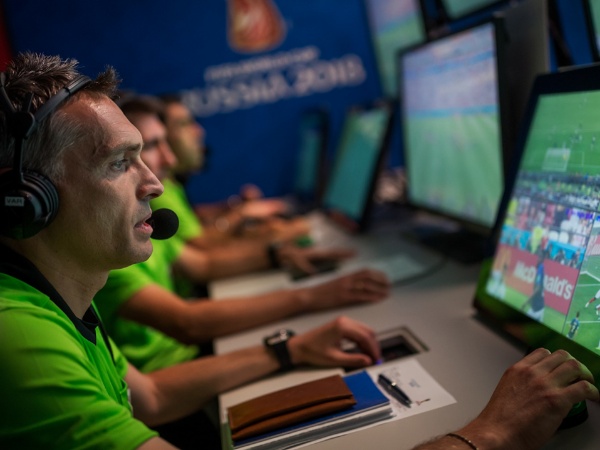
Technology and the Future of Football

Football as a sport represents an aspect of human history. It might and will not be indispensable to human coexistence but in its historiographical context, its presence has imposed itself on the pages of human history, more still in areas which are deemed and appears to be in the list of normal human sequential priorities. Just like the wave of politics and military warfare of human history, invention precedes an evolution and resistance or changes to the status quo lords an evolution to make it a revolution. However, this revolution might be of positive or negative influence depending on how much it transforms the existing status quo and the latter, to what degree does it lose touch with its primordial essence and reality. The latter seems to be the Achilles heel for any phenomenon with football inclusive. True, technology makes football efficient and inspires millions to keep in touch with the sport but on the flip side, it has marred in the strictest sense and with an endless purge of technology into sports, the future of the game appears bleaker than it seems. Technology is undoubtedly a revolution to football. Thanks to it, I can scroll without any glitch on YouTube to see clips of footballers whom I didn’t have the luxury to. I could also freely watch matches I missed and prepare insightful analysis on the game patterns, formation and make up. The advantages apparently seem uncountable. As a matter of fact, thanks to technology, opportunities in sports have been broadened and at the comfort of my couch, I can bet and receive instant credit alert on match days. However, all at the expense of what? Technology has plunged football into an unending argument. One between ‘pro-technologists and the moderates’, between insights and statistics and lastly between ‘realists and idealists’. When the conception of VAR was firstly born, the footballing world became awash along diverse views of argument. To some, it was a welcome development to disallow occurrences such as that of Lampard’s at the 2006 World Cup. Logically, this made sense. A whole lot of. I remember how referee’s decision cost too many wailings and woes both to friends and foes alike. #OnThisDay in 2010 England were knocked out of the World Cup, losing 4-1 to Germany with that disallowed goal from Frank Lampard. Still, it proved the catalyst for the introduction of goalline technology. Every cloud… ????#tbt #ThrowbackThursday pic.twitter.com/W35P2bChfg — Match of the Day (@BBCMOTD) June 27, 2019 To some, it was a great move albeit with potentials of impending doom in future. Practically, it is not essentially about the controversies surrounding the novel development but rather, the futuristic fruition it seeks to bequeath to the sport. In other words, the pace it sets for other innovations. In 2050, we might have to see robots lined at the touchline to monitor offside traps or even drones as form of referees for eagle-eyed observations. The mistake pro-technologists or idealists tend to make most times, is to lose touch with reality. Mistakes are in tandem with humans, it cannot be exhumed. In fact, memorable sporting moments in history maintains their spots in our hearts due to mistakes unintentionally made by match officials. I’m quite aware that it has irked many in more than one case, but interestingly, VAR doesn’t lose this sight also. I am not – never been – a fan of VAR. Before you bring any clever quip I am just a football fan like any other. I can share my views on the sport.Just leave the game as it is. Those extra officials during UCL games have not helped. I like goalline technology though. — Calvin 'Emeka Onwuka (@CalvinEmeka) November 15, 2018 Statistics are already undeniably a formidable aspect most especially in trying to create a scientific documentation of facts but it also comes with numerous flaws, and one of, is the growing reliance on figures which has invariably turned football into a sort of mathematical equation, where linears are organically linked to form a perfect whole. Not to mix things up, statistics are as much as important as insights. While statistics forms the basis of our opinions, opinions highlight personal information and intelligence to make a meaningful substance off it. Whereas, statistics are baseless without personal perception or intuitions, the other reflects the ‘art’ of the game which is a luxury nearly exclusive in nature. Unfortunately, the next aeons of footballing years would be suffused with a plethora of statistics with lesser insights. Sometimes around 2050, players transfers might just be handled by Artificial Intelligence. Coaches role might just be reduced. Some AI might be in charge of match formations leaving the managers and with the miniscule roles of psychology and morale boosters. The footballing world is in short of dexterous players with flawless lush of skills. The likes of Garrincha, Maradona, Messi, Ronaldo Nazario, Robinho and Neymar can make five to six dribbles within a ambit of gestural speed. A five-second step over by Robinho can stir a confusing movement by the player at the receiving end. However, players of this contemporary era are much collaboratively wired in playing make up. Now, tactical approaches to matches are constructed to limit the opportunities for individual players flaunting their stocks. It is more of a collaborative game, a sort of one-two passes. It is really not as if players with such natural breeds are wanting but they either reduce or lose it owing to the reality they find with their coaches on the pitch of play. In coming years, this trend is not likely to wane. Dribbles and skills would be done in a situation that highly warrants it and we might just see another breed of footballers with abysmal level of technicality. "I thought I was going to love VAR the way I love goalline technology." Jose Mourinho has criticised VAR, but was full of praise for Mike Dean. More ➡https://t.co/RfEH5YxOQz #bbcfootball pic.twitter.com/YwMm2cbLJ1 — BBC Sport (@BBCSport) February 3, 2020 The fifth decade of

Technology and the Future of Football Read More »

subscribe to our newsletter

stay up to date with the latest content

Subscription Form

Scroll to Top