October 2013

The ‘only special one’ part 2

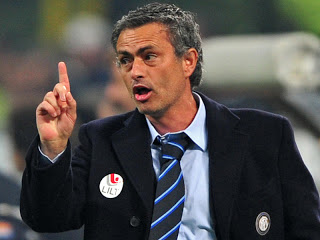
 Below is a list of quotes at various incidents and events attributed to Jose Mourinho coined out from Eurosport. WHILE PORTO COACH: “The only thing that I want to say is that we are the best ones and in normal conditions we are more than the best ones. In normal conditions we will be champions. In abnormal conditions we also will be champions.” AFTER BEING APPOINTED AT CHELSEA: “Please don’t call me arrogant, but I’m European champion and I think I’m a special one.” REFLECTING ON HIS MOVE FROM PORTO TO CHELSEA: “If I had wanted to be protected in a quiet job, I could have stayed at Porto. I would have been second, after God, in the eyes of the fans even if I had never won another thing.” PRESSURE OF THE PREMIER LEAGUE TITLE RACE IN 2006: “For me, pressure is bird flu. I’m feeling a lot of pressure with the swan in Scotland. It’s not fun and I’m more scared of it than football.” TOTTENHAM HOTSPUR’S TACTICS IN A 0-0 DRAW WITH CHELSEA: “As we say in Portugal, they brought the bus and they left the bus in front of the goal.” AN INJURY CRISIS AT CHELSEA: “It is like having a blanket that is too small for the bed. You pull the blanket up to keep your chest warm and your feet stick out. I cannot buy a bigger blanket because the supermarket is closed. But I am content because the blanket is cashmere. It is no ordinary blanket.” FEELING THE FINANCIAL PINCH TOWARDS END OF TIME AT CHELSEA: “The style of how we play is very important. But it is omelettes and eggs. No eggs – no omelettes. It depends on the quality of the eggs. In the supermarket you have class one, two or class three eggs and some are more expensive than others and some give you better omelettes. So when the class one eggs are in Waitrose and you cannot go there, you have a problem.” CONTEMPLATING A FILM OF HIS LIFE: “If they made a film of my life, I think they should get George Clooney to play me. He’s a fantastic actor and my wife thinks he would be ideal.” AT INTER MILAN:                                                                                          “I am very happy at Inter. I am not happy in Italian football because I don’t like it and they don’t like me. Simple.” ON FORMER CHELSEA MANAGER CLAUDIO RANIERI: “I studied Italian five hours a day for many months to ensure I could communicate with the players, media and fans. Ranieri had been in England for five years and still struggled to say ‘good morning’ and ‘good afternoon.’” AFTER WINNING LA LIGA WITH REAL WITH RECORD POINTS TOTAL: “Like me or not, I am the only one who won the world’s three most important leagues. So maybe instead of the ‘Special One’, people should start calling me the ‘Only One’.” BEFORE CHAMPIONS LEAGUE SEMI WITH BARCELONA IN 2011: “One day he (Einstein) said that the only mechanical force more powerful than steam, electricity and atomic energy is will. That Alberto bloke was not stupid. With will you can achieve things.” AFTER REAL’S CHAMPIONS LEAGUE DEFEAT BY BORUSSIA DORTMUND: “I know I am loved in England. I am loved by the fans and the media. They treat me fairly. They give me credit when it is due and criticise when it is deserved. I am loved by some clubs, especially one. In Spain it is different, some people hate me, many of you in this room.”   IN THE WORDS OF OTHERS ABOUT JOSE MOURINHO ARSENAL MANAGER ARSENE WENGER: “He’s out of order, disconnected with reality and disrespectful. When you give success to stupid people, it makes them more stupid sometimes and not more intelligent.” RETIRED MANCHESTER UNITED MANAGER ALEX FERGUSON: “He was certainly full of it, calling me ‘boss’ and ‘big man’ when we had our post-match drink after the first leg. But it would help if his greetings were accompanied by a decent glass of wine. What he gave me was paint-stripper.” FORMER LIVERPOOL MANAGER RAFA BENITEZ: “We were good friends until Liverpool started winning, then he started changing his mind.” CATANIA DIRECTOR PIETRO LO MONACO: “Mourinho is simply someone who should be smacked in the mouth.” I’m sure you have a personal quote about Mourinho too. You can put that as a comment below for the fun of it.  

The ‘only special one’ part 2 Read More »
The ‘only special one’

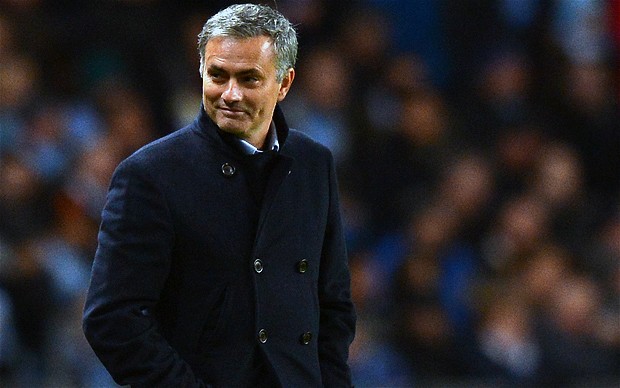
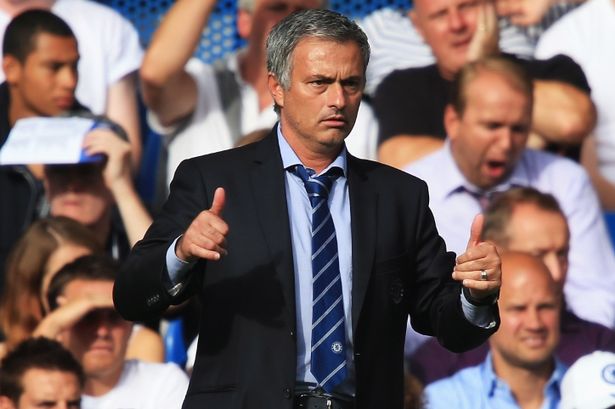
            Jose Mourinho is no doubt one of the greatest managers to have graced the game of football. His CV alone tells you he is one of the finest along with the likes of Pep Guardiola, Sir Alex Ferguson, Vicente Del Bosque, Ottmar Hitzfeld among many other great managers football has produced. Jose Mourinho stands out among many managers partly because of his character. The image Mourinho has portrayed of himself has made him a media favourite if not the best. He creates attention, he creates controversy and that’s basically what the media like. Though Mourinho’s character has landed in trouble many times with the football authorities, that has not hampered his reputation as a fantastic coach on the field. Let’s not forget his dress sense. Also one of the most fashionable coaches. His mafia suits caught the eyes of people the 1st time he came to Stamford Bridge and his legend status with Chelsea has made the suit to be put on display at the Stamford Bridge Museum in London. Mourinho is also known to have elements of pride, arrogance and eccentricity. These are reflected in most of his speeches and his confrontation with football personnel. He is seen as a pain in the neck to many managers but its normal that happens. You become a pain to others in the face of your success. This has made many football personalities to say different stuff both negative and positive about Mourinho and he’ll always hit back at you.                Andres Iniesta when asked in an interview if Mourinho had damaged Spanish football following his departure from Real Madrid in the summer said “Yes he damaged Spanish football, in general more harm than good.” Iniesta did not digress on his point and said “But I don’t like talking about that person at all. So if you don’t mind we’ll leave it at that.” What could have prompted Iniesta not to digress? He made the statement the Mourinho damaged Spanish football partly because of the many controversies he caused especially in the ‘El Clasico’ fixtures. It’s no denying that Mourinho’s presence made the Clasico’s a much tougher affair for Barcelona. Iniesta didn’t really prove his point and you can be sure Mourinho would hit back. This is what Mourinho said in response to Iniesta’s comments “I damaged Spanish football by being the manager that broke Barcelona dominance,” he said. “They were dominant and dominant and dominant and it looked like it was dominance without an end.”Real Madrid won the Cup final against Barcelona, Real Madrid won the Super Cup against Barcelona, Real Madrid won in Barcelona and Real Madrid won the championship which is the historical championship of 100 points and 121 goals.”             What Mourinho said is absolutely true. He highlighted his achievements at Real Madrid in that statement but you can feel a sense of pride and arrogance in it too and that is who Jose Mourinho is.  

The ‘only special one’ Read More »

FC Porto’s biggest player transfers

       This is a factbox on FC Porto’s biggest player sales in the last decade, during which the Portuguese club have reaped more than half a billion Euros. It does not include transfer deals worth less than five million Euros or those with an undisclosed fee. James Rodriguez in 2012/2013 to Monaco for €45 million Joao Moutinho in 2012/2013 to Monaco for €25 million Hulk in 2011/2012 to Zenit St Petersburg for €40 million Alvaro Pereira in 2011/2012 to Inter Milan for €10 million Fredy Guarin in 2011/2012 to Inter Milan for €11 million Ruben Micael in 2010/2011 to Atletico Madrid for € 5 million Falcao in 2010/2011 to Atletico Madrid for €40 million Raul Meireles in 2009/2010 to Liverpool for €13 million Bruno Alves in 2009/2010 to Zenit St Petersburg for €22 million Lisandro Lopez in 2008/2009 to Lyon for €24 million Lucho Gonzalez in 2008/2009 to Marseille for €18 million Aly Cissokho in 2008/2009 to Lyon for €15 million Ricardo Quaresma in 2007/2008 to Inter Milan for €25 million Jose Bosingwa in 2007/2008 to Chelsea for €21 million Pepe in 2006/2007 to Real Madrid for €30 million Anderson in 2006/2007 to Manchester United for €30 million Diego in 2005/2006 to Werder Bremen for €6 million Seitaridis in 2004/2005 to Dynamo Moscow for €10 million Maniche 2004/2005 to Dynamo Moscow for €16 million Derlei in 2004/2005 Dynamo Moscow for €8 million Ricardo Carvalho in 2003/2004 Chelsea for €30 million Deco in 2003/2004 to Barcelona for €18 million, plus Ricardo Quaresma Paulo Ferreira in 2003/2004 to Chelsea for €20 million Helder Postiga in 2002/2003 to Tottenham Hotspur for €9 million   The total on all these figures listed amounts to €491 million. Source: Eurosport

FC Porto’s biggest player transfers Read More »

How FC Porto have thrived in player sales worth £342 million

       During the last decade FC Porto of Portugal have reaped more than half a billion Euros from player transfers while keeping their competitive edge sharp. Porto’s sales of Joao Moutinho and James Rodriguez to Monaco for €70 million (£60m) during the summer transfer window were the latest in a long series of big-money moves. “We are used to seeing this from Porto in the last 10 years or so: excellence in elevating players’ quality,” Portuguese League boss Mario Figueiredo told Reuters. Figueiredo said Portugal was, between 2001 and 2011, the only European Union country with a positive net balance in player trade, with sales of some €1 billion (£850m) and a €400 million (£342m) surplus. “We have become a stepping stone for talent from several South American countries, not just from Brazil but also Colombia and Argentina,” Figueiredo said. Debt-laden Portugal wants to export its way out its economic crisis and its football clubs, at least, seem to have listened. If you deduct what Porto paid for their later resold players, they pocketed some €400 million (£342m) in transfer gains over the decade, Expresso weekly reported, and did so while winning the league almost every year. Porto have been champions in eight of the last 10 seasons and also won the Champions League in 2004 and Europa League in 2003 and 2010.             One of their first sales of the decade was Portugal striker Helder Postiga to Tottenham for €9 million (£7.7m) in 2003. Postiga failed to thrive in London but Porto were undaunted. They sold Anderson to Manchester United for some €30 million ((£26m), Colombian striker Falcao to Atletico Madrid and Brazilian Hulk to Zenit St. Petersburg for €40 million (£34m) each, to name just a few. Porto have dug into the South American pool of talent in particular, carefully picking talent, getting them cheap and developing them and then collecting the profit.             “The secret for a small country like us to stay up there with the very best is to be highly professional and nurture talent,” said Figueiredo. Behind the success lay basic economic reasoning: buy low and sell high. “This happens all throughout the value chain, not just with Porto and Benfica but also with clubs like Braga and Maritimo and in the lower leagues.” Figueiredo said             The rise of big-spending Russian oligarchs such as Chelsea’s Roman Abramovich and now Monaco’s Dmitry Rybolovlev has also helped clubs such as Porto to find demand for their shiny talent. In 2004 alone, Abramovich spent more than €60 million (£51m) on three players – Ricardo Carvalho, Paulo Ferreira and Tiago who moved from Porto to Stamford Bridge with Coach Jose Mourinho. “Porto have really won international prestige with the passing of the years and created a very strong structure,” former Porto coach Andre-Villas Boas said in December last year. “It is the most organised club I’ve seen.” Even with so much of Porto’s talent leaving, the team have shown a remarkable resilience.             Coach Vitor Pereira brought in Colombia striker Jackson Martinez to fill the hole left by goal machine Falcao and overcome the exit of Hulk last year. Martinez topped the goalscoring table to help his new club to claim a third consecutive championship last season. “Our board really knows what it is doing,” Porto keeper Fabiano said. “Rodriguez and Moutinho left but Porto will be strong next season, ready to dispute the championship and be champions. Such statement is true and if trend continues, Porto will remain one of Europe’s financially debt free teams.  

How FC Porto have thrived in player sales worth £342 million Read More »

Why Ozil’s arrival could help Walcott

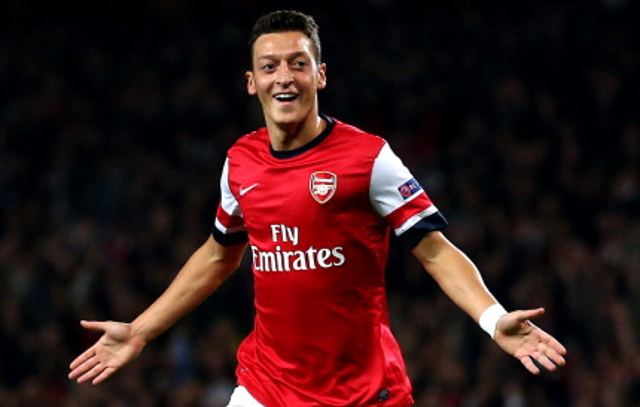
                 Theo Walcott was positively gushing when asked about whether he was looking forward to playing alongside Mesut Ozil this season. “It’s very exciting,” Walcott told Sky Sports News. “He’s a great addition and I am personally looking forward to playing with him.” His delight is no different to the way that every Arsenal player and fan is excited to see Ozil take the field for the Gunners. Walcott perhaps more than anyone has the right to be excited about Ozil’s transfer, for it’s his work on the right-flank that could stand to benefit most from Ozil’s arrival.             Walcott produced his strongest season last year for the Gunners scoring 14 goals and getting 10 assists in 32 games. At his best, he was a nightmare for opposing defences to control, with his pace and creativity capable of producing either goals or assists. His performance in Arsenal’s 5-1 defeat of West Ham last season showed just how dynamic and involved he can be down the right-wing.             With a player of Ozil’s qualities roaming in the middle of the field, Walcott stands to become a huge beneficiary this season. Walcott’s direct playing style and strong runs are far more likely to be met with a defence-splitting pass from the German, and Walcott should see far more chances fall his way this season as a result. If we compare the chances created and goals scored by the last top-class winger to play with Ozil in Cristiano Ronaldo, the results are staggering. Last year, Ronaldo scored an amazing 34 La Liga goals from a possible 181 goalscoring chances, giving him a conversion rate of 18%. By comparison, Walcott’s conversion rate was higher (22%) and had he been given the 181 goalscoring chances that Ronaldo had, in theory anyway, Walcott could have scored upwards of 40 goals last year. Ronaldo is one of the greatest players in the history of football, but it’s clear that his goalscoring ways were boosted by simple chances often falling his way. Ozil along with the rest of Madrid’s star-studded midfield did much of the hard work for Ronaldo, and were able to provide him with an abundance of chances as a result. After all, the Portuguese international nearly had three-times the chances that Walcott had last-term.             The thought of Walcott then becoming a world-class winger is a genuine possibility. Ozil has ability like few others in creating chances, and if the England international can develop the understanding that Ronaldo had with Ozil, then there’s no reason why we won’t see a dramatic increase in Walcott’s production this year. Providing Walcott is looking to score and puts himself in good positions at all times like Ronaldo, then Walcott could be the biggest winner from Ozil’s arrival.  

Why Ozil’s arrival could help Walcott Read More »

Is Kagawa becoming a waste at Manchester United?

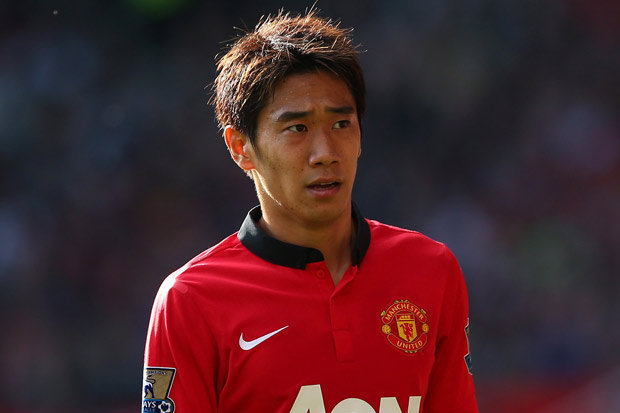
Shinji Kagawa was signed by Sir Alex Ferguson 12 months ago from Borussia Dortmund. The Japanese star came with a reputation as an exciting attacking midfielder with an eye for a pass and an eye for goal. Despite that he barely featured last season and David Moyes hasn’t really found room for him this season. So we ask the question: should Moyes find a role for Kagawa at United? Kagawa was utilized mainly as a left midfielder last season. This is not really his best position though, especially in United’s formation where they ask their midfielders to provide width and cross the ball into the box. Kagawa is best when he comes into central positions, operating as a No.10 behind the striker. He creates the lion’s share of his chances from central positions, not from out wide. With a high pass completion of 90% last season and the ability to take on players, he is a very technical attacking midfielder who is best playing centrally but moves wide to find space, rather than going inside to out. Kagawa is creating chances in the area where we would expect a No. 10 to play. However, the Japan international only played the full 90 minutes on five occasions last season – starting 17 games but being hauled off in the other 12 fixtures. The reason for this is that there is an intense competition for places at United. Wayne Rooney is occupying the No. 10 role and despite some criticism of his form last season, he was a very influential figure playing behind Robin van Persie. Had Rooney left the club then Kagawa would have been incredibly important. However, as things stand Kagawa is finding it tough to find a role with Rooney in front of him in the pecking order. Recently Danny Welbeck has also been used off Van Persie, further limiting opportunities for Kagawa. Moyes has arguably altered Manchester United’s tactics to more of a 4-4-2, a system that doesn’t suit Kagawa. Against Swansea and Liverpool in the league this season, Moyes used Danny Welbeck as more of a second striker, rather than a No. 10. For all of Kagawa’s quality he is not suited to playing in a 4-4-2 system as a second striker, or as a winger, which makes it difficult to find a role for him in Moyes’ tactical set-up. Against Liverpool, Welbeck only attempted 27 passes, which is very low for a No. 10 and confirms the view that he was playing in a more advanced area. Welbeck spent very little time in his own half and was predominantly in advanced areas, not dissimilar to Van Persie, with both players playing relatively close to each other in this tie. This is indicative of more of a 4-4-2, than the sort of fluid formation, such as a 4-2-3-1 that would suit a player like Kagawa and get the best out of him. If we compare this to United’s 4-0 win against Norwich last season in which Kagawa got a hat-trick, we can see a slight difference. Kagawa spent more time in the centre of the park, as well as dropping back into his own half slightly more. Also he saw much more of the ball in the Norwich game in comparison to Welbeck from the Swansea and Liverpool game this season. Kagawa averaged 42 passes per game last season, which is quite high considering he only played 90 minutes on five occasions. The problem Kagawa is facing at United is that he is primarily a No. 10, while Moyes is using a 4-4-2 or 4-4-1-1 system which is not best suited to Kagawa, especially if Rooney is in the side. Rooney is the primary playmaker and if he doesn’t start then Moyes has opted to select Welbeck as the second striker. Although Kagawa can play from the left he will not hold the width or cross the ball, but rather try to drift infield, something that isn’t conducive to United’s style of play. As a result, Kagawa might find opportunities limited this season, despite his obvious quality.  

Is Kagawa becoming a waste at Manchester United? Read More »

How will Moyes use Fellaini at Manchester United?

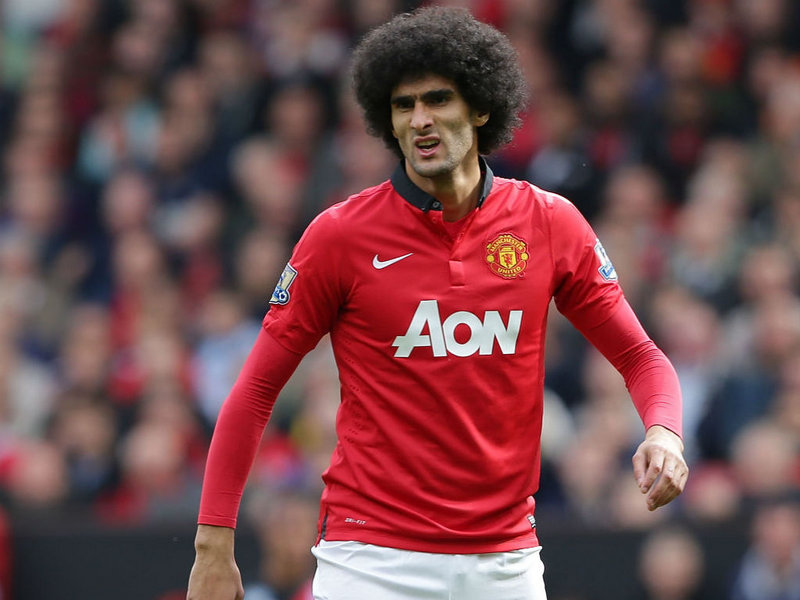
    Manchester United were relatively quiet in this transfer market and David Moyes’s only high-profile signing was Marouane Fellaini for around £27 million. United’s centre-midfield problems have been highlighted for some time, but where exactly will Fellaini fit into Moyes’ plans? Last season 28 of Fellaini’s 31 appearances came as a second striker or attacking midfielder with just three coming as a central/deeper midfield player. What we can conclude from this is that, at least at Everton, Moyes saw Fellaini as a forward player, rather than a defensive-minded one. Everton were regularly seen aiming long balls or crosses into the box at Fellaini, who would act as a target man to bring the ball down and either shoot or try and bring another player into play. In this position Fellaini was relatively effective, scoring 11 times and getting five assists. Generally speaking he was a handful for opposition defenders and goalkeepers with his bullish style of play. In Everton’s 3-1 win over Reading last season in which Fellaini scored, he spent the large majority of his time in the final third of the pitch, spending very little of the game in the more defensive areas. Fellaini was primarily operating as a second striker, playing just off the central striker. Despite having 18.70% of his play in the middle area of the pitch, Fellaini made just one tackle in this game, which further points to the more advanced and freer role he has when playing off of a striker. His main strength which is his height was utilized excellently though, as he won 11 out of 16 headed duels.             With Shinji Kagawa, Wayne Rooney and Danny Welbeck all capable of playing as the second striker/attacking midfielder in United’s set-up, it seems incredibly unlikely that Moyes will use Fellaini as an advanced player. Instead he’ll likely come into the side as a central midfielder alongside Michael Carrick. This season Roberto Martinez has played Fellaini in this central midfield position. Fellaini has dropped deeper and as such has been enjoying more of the ball than he did last season, averaging 73.3 passes per game at an accuracy of 89% (a vast improvement on last season’s 52.3 passes per game and 79% accuracy). Against Cardiff this was also notable with Fellaini attempting 66 passes. Fellaini enjoyed 91% pass accuracy in the Cardiff game and notably the bulk of his passes were from his own half, further demonstrating how he has been used as a defensive/central midfielder this season under Roberto Martinez. Of course, Martinez places a huge emphasis on possession and using the ball, but this shows that Fellani can adapt to a more technical-based system if required of him. Fellaini has also been very combative this season, which bodes well for Manchester United fans. The big Belgian has won 4.3 tackles per game vastly more than Carrick or Tom Cleverley at an impressive 85% success rate. Not only that, but we can still see that he remains an impressive aerial presence, which can add a lot to Manchester United’s game in both penalty boxes. When he was used as a central midfielder last season he committed a lot of fouls, around 2.6 per game, more than any other Premier League player. This has important implications for Fellaini as a central midfielder, especially in a deeper role, as he is prone to a rash tackle and regularly fouls opponents who get past him. This season we can also see that he is fouling too regularly, something that he must improve at United, or he will risk giving away cheap free-kicks and being booked unnecessarily.             Whilst Fellaini can provide an option as a second striker/attacking midfielder, it appears very unlikely that he’ll do this at Manchester United. He can provide a ‘Plan B’ as a long ball option in tighter games, something that the Old Trafford faithful might not take kindly to. On the whole however, he’ll be competing with Tom Cleverley for a place alongside Michael Carrick. Fellaini isn’t the fastest player but he is combative and can win the ball as he’s already shown this season for Everton in his three outings. The worry will be his tendency to give away a lot of fouls: if he wants to be a hit at United he will have to improve his disciplinary record. If he can continue to dominate the midfield, by winning tackles and continuing to show an improved pass accuracy, then there is no reason why he cannot succeed at United, regardless of whether he was the fans’ top choice or not.  

How will Moyes use Fellaini at Manchester United? Read More »

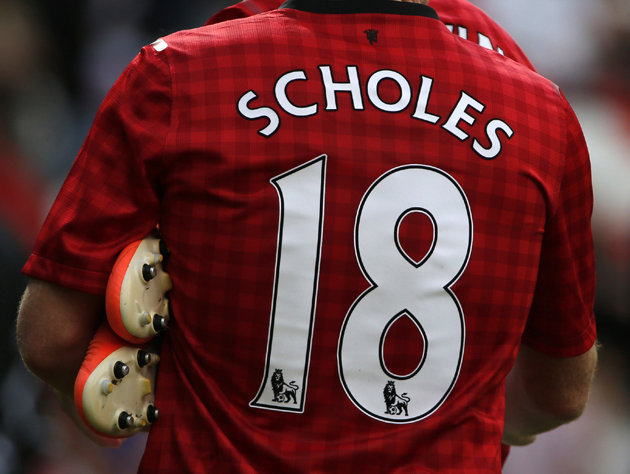
Manchester United needed and failed to replace Scholes

  Sir Alex Ferguson grabbed all the headlines when he retired from the game at the end of last season. And why shouldn’t he? Manchester United grew into the dominant force in English football as a result of his influence. But there was another significant departure from both the club and the game. Paul Scholes left the game of football as one of England and United’s finest ever players. He played a huge part in Ferguson’s era of dominance after breaking into the side back in 1994. So often a game-changer when the ball was at his feet, the quality of his vision and execution was matched by very few. Replacing him was always going to be a near impossible task. But when new manager David Moyes voiced his intent to strengthen the midfield this summer, fans were encouraged by the fact that he was at least going to try. He failed. Marouane Fellaini, though a useful player who will no doubt bring a level of physicality and presence that was missing from United’s central midfield, is not a player in Scholes’ mould. Ander Herrera wouldn’t have been a like-for-like replacement either, but he would’ve brought back some of the creativity that Scholes’ departure took away. But United refused to push the boat out for the Spaniard, opting for Fellaini instead, and at £4 million more than they could have got him earlier in the summer. And this isn’t the start of it. Reported interest in the likes of Luka Modric, Thiago Alcantara, and others failed to materialize into done deals over the years. Saying that, why have United, up to now, failed to replace such a key player in Paul Scholes? In truth, it’s anyone’s guess. Ferguson repeatedly claimed over the years that he was happy with his midfield, while fans are adamant that the club’s owners, the Glazers, are refusing to provide the cash needed to sign a top quality reinforcement. Whatever the case, the failure to nab a top quality creative midfielder has cost United over the years and looks set to cost them again this season.             In the games United have played so far this campaign, the absence of ideas in the middle of the park remains painfully evident. “We just couldn’t find the right pass… to make the chance,” Moyes lamented following the goalless draw at home to Chelsea. Interestingly enough, finding the right pass was exactly what Scholes was about. He attempted an average of nine long balls per game in his 16 appearances last season, completing a very impressive 85% of them. Overall, he completed a staggering 92% of his passes, this despite him averaging a pass length of 20 meters. He was the very personification of wonderful vision and technique. Of course, picking passes was only half of his game, though it became pretty much all of it as he was forced to save his legs in a deeper position once his career had entered its twilight period. But in his early days his forays forward were a genuine threat. It wasn’t strange to see the ginger-haired maestro popping up in the box to rifle an effort beyond a sprawling opposition keeper. The 20 goals he scored in all competitions back in the 2002/2003 season remains his best ever tally and showed that he was about scoring just as much as he was about passing. Nowadays, only Michael Carrick at least comes close to what Scholes brought to United’s midfield and that’s only as far as passing is concerned.             No matter what Ferguson said before and Moyes is saying now, United’s midfield still miss the kind of drive, movement, and incision that a Scholes in his prime offered. And it misses the goals he contributed back in his youthful days. United fans no doubt feel that this problem has dragged on long enough, and that it’s time the club finally rectified it. Failure to do so will see the club continue to suffer – in the league, but particularly in Europe.                          

Manchester United needed and failed to replace Scholes Read More »

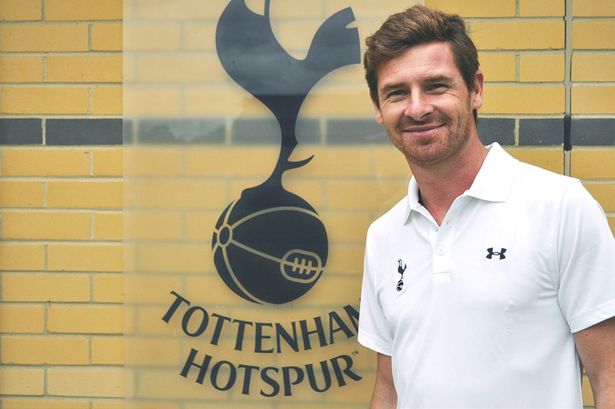
AVB ready to change perceptions about the Europa League

      Andre Villas-Boas doesn’t know why the Europa League is valued so poorly in England. Ricky Bobby in Talladega Nights said ‘if you ain’t first, you’re last’. Or, in this case, if you ain’t fourth, you’re last. Football is obsessed with the grandeur of the Champions League. Spurs reached that zenith once which was in 2009/2010 and they have been desperately trying to get back there since. So, when Tottenham beat Arsenal 2-1 in March last year to move into 3rd  place, 7 points clear of their north London foes, there was excited talk of a changing of the guard. It looked increasingly likely that the Lilywhites would finish a season ahead of their staunch rivals for the first time for 18 years, and, more importantly, return to the Champions League. Wily old fox Arsene Wenger would not be drawn merely asking any journalists who posed such a question to ask it again come the end of the season. Of their last 10 Premier League games of last season, Tottenham lost 2, drew 3 and won 5. Both losses came after Europa League participation. The games straight after their last-16 fixtures against Inter ended in defeat to Liverpool and Fulham respectively. Playing Everton after the first leg of their quarter-final against Basel, Gylfi Sigurdsson rescued a point in the 87th minute, that’s eight points dropped from a possible nine. They had no fixture after the second leg and their 10-day rest saw them respond and effectively end Manchester City’s title aspirations while simultaneously reigniting their hopes of Champions League football. Alas, it was not to be.             Villas-Boas’ affinity with the competition was understandable having burnished his reputation there a few seasons previously, winning it with Porto. However, the cold facts do not lie: the Europa League cost Spurs a top-four spot last season. However, a summer of transfer wranglings has given Villas-Boas the opportunity to re-define the prevailing attitude toward a competition that his predecessor Harry Redknapp once described as a ‘punishment’. Gareth Bale has facilitated this. His sale set in motion a complete re-balancing of the Tottenham squad. Not only do they have far more strength in depth with greater European experience but they are also a more physical presence. Most of the re-shaping has come in midfield. A selection from Etienne Capoue, Paulinho, Sandro and Mousa Dembele, augmented with creative additions Christian Eriksen, Nacer Chadli, Erik Lamela and last January’s acquisition Lewis Holtby, will provide a stern test for many a side, home or abroad.             Having been hamstrung by Daniel Levy’s transfer window intransigence that saw key players leave at the end of the previous season’s summer window with little time to bring in adequate replacements, Villas-Boas ultimately led a two-pronged assault with largely Redknapp’s squad. They came close to achieving quite an admirable feat but, by Bobby’s reckoning, they ultimately finished last. However with the personnel now to fit his tactical acumen, Villas-Boas could very well set about changing a laboured view of Europe’s second competition in the UK, bringing silverware to the club, while simultaneously claiming the much-sought Champions League spot    

AVB ready to change perceptions about the Europa League Read More »

Is Jose the right man at Stamford Bridge?

This current Chelsea squad isn’t a Jose Mourinho-type squad and that has reflected in Chelsea’s up and down start to the season which was similar to when Mourinho 1st quit in 2007. Mourinho likes to control games, but this Blues squad is weighed down with attacking players. What he wants is a younger version John Terry, Frank Lampard or Didier Drogba. Instead he’s got fantastic flair players, but that’s not how Mourinho plays. He must take some responsibility as he had time to make signings, but failed to get the players who would have fitted his philosophy. Romelu Lukaku is the nearest they have to a Drogba, but to send him out on loan is a typical cautious Mourinho move. Lukaku might have Drogba’s features but it’s too early to say he’s the next Drogba. Mourinho weighed it all up and wants a proven player at the business end of the season, so he’s gone with someone he worked with before in Samuel Eto’o. It seems Mourinho doesn’t trust Fernando Torres and if he doesn’t trust Torres, why not offload him? They had long enough in the window to sell him so why keep him around if you’re not going to use him? The transfer of Willian has some question marks. There is no doubt Willian is a great player, he’s such an attacking threat that he can rip any defense apart if given space but there’s a feel that Mourinho is not getting enough defensive work from his attack-minded players. Mourinho is never going to send a side out there and say, “go and play boys; go and entertain me”. NEVER! He wants to be in control of every game, he wants to take the risk out of games but he doesn’t have the personnel. Chelsea have got so many options in attacking areas that as the season goes on Mourinho will struggle to know what his strongest XI is. Managers such as Rafa Benitez, AVB, Pellegrini among others could cope with this squad but it just doesn’t suit the way Mourinho wants to play. When Mourinho was at Inter he had limited players in attack but more options in the midfield and at that the back. These players were rock solid and it helped Mourinho succeed in his cause there. It’s not doubt that though Mourinho’s time was short in Italy, he remains one of Inter’s most successful coaches. After all, Rafa Benitez was alleged to have pulled down a picture of Mourinho in Inter’s dressing room when Benitez took over from Mourinho, following his flight to Real Madrid. That shows you the affinity Inter have with Mourinho. Mourinho’s move to Real Madrid was a partial success. He failed to win the Champions League that has been missing in the Bernabeu for the past 11 years, though he came close with two consecutive semi-finals in 2011 and 2012, it was still a big disappointment given his pedigree in the champions league. He was able to succeed locally, ending Barcelona’s league and clasico dominance. Mourinho had to switch his style of play in Madrid to attacking one. He publicly admitted that Real Madrid cannot defend but attack. True statement and Real where a fearsome attacking side. The league winning season of 2011/2012 saw the trio of Ronaldo, Higuain and Benzema net over 20 goals each in the league and a combined total of 118 goals for that season, the most of any attack in Europe. Though Real were an attacking side, the players, attackers inclusive were defensively alert. Chelsea under Mourinho’s 1st tenure were a physical and defensive side but with many of those tough tackling players gone, Chelsea has now evolved into a total attacking team. Mourinho if he employs attacking tactics needs players that can fall back when needed and apparently the current attackers in the likes of Juan Mata, Oscar, Hazard, and Willian are not defensively alert, hence the big problem Mourinho faces. Well an option can be to start putting them on defense training schedules but really why put a player such as Oscar busting with flair on defense training? It really doesn’t click. Going back to Chelsea is the biggest challenge of Mourinho’s managerial career. He is exceptional but it is never the same the second time around and we should never forget why he left the first time, Roman Abramovich was not happy with the way they played. If anything, Mourinho is more cautious than when he was first time round. Sure, Mourinho allowed Cristiano Ronaldo freedom at Madrid. Well he had to because he was too exceptional to play a particular way but he looks uncertain whether to give the attackers in this current Chelsea that freedom. He has a completely different idea of when a player is ready. These players look ready to take on a big role. Lukaku was ready to show his worth but Mourinho wasn’t convinced despite him scoring more than any Chelsea player when he was on loan at Westbrom last season. Juan Mata has been Chelsea best player for the past two seasons, yet for the unknown reasons, he’s seeing himself on the bench. Mourinho is different from most of the rest of the football world. For him, players need to be workaholics that can play loads of games and that’s not the case with this Chelsea team. This is not the team of the Makelele’s, the Essien’s at his prime, the Geremi’s, the Malouda’s, the Kalou’s, the Ballack’s and so on. Those guys played their life out on the field and played according to Mourinho’s script. He has to give this squad a little bit more freedom in the way they play and not overuse them before they get burnouts.  Mourinho has an exceptional pool of talent, and that group of players should be good enough to win the majority of their games, but a manger needs to get the best out of what he has at his disposal. For Mourinho to do that

Is Jose the right man at Stamford Bridge? Read More »

subscribe to our newsletter

stay up to date with the latest content

Subscription Form

Scroll to Top